
Last Updated on August 3, 2026 by Rebecca Metz
A straightforward look at what latex is, how it is made, and how to tell real latex from the blends that borrow its name.
Amanda Demuth, MSN, RN · Wellness Advisor, Austin Natural Mattress
Introduction
Latex is one of the most confusing materials to shop for. Walk into a mainstream mattress store and you will find almost none of it, because the industry builds on cheaper polyurethane and memory foam instead. Latex turns up in specialty shops, where it sits on a showroom tag next to words like Dunlop, Talalay, natural, and blended, usually with no explanation, so two tags can look alike when the materials behind them are not. Latex has been used in beds for about a century, well before memory foam arrived, and it has earned its place by lasting. Knowing how it is made, and what those labels actually mean, is what separates a mattress that lasts twenty years from one that fails early.
The sections below cover what latex is, how the two main types are made, and how to tell real natural latex from the blends that share its name. With latex, the label carries most of the value, so it is worth learning to read one.
Quick Answer
Latex is a springy foam made from the sap of the rubber tree, Hevea brasiliensis. In a mattress it supports the body and bounces back, without the slow sinking feel of memory foam. Natural latex also breathes well and resists dust mites, mold, and mildew, which is why it is used in many high-quality natural mattresses.
Key Takeaways
- Natural latex comes from a tree. It is tapped from the milky sap of the rubber tree and cured into a firm, elastic foam.
- It lasts. A good natural latex core often holds up for 15 to 20 years or more, longer than any other foam.
- It sleeps cool and clean. An open structure and pincore holes, the small pin holes left by the molds, move air through the foam, and latex resists dust mites, mold, and mildew on its own.
- Not all latex is equal. The words natural, blended, and synthetic describe very different materials, and only certification confirms what is inside.
Where Latex Comes From
Latex starts out as a liquid. A grower cuts a shallow groove in the bark of the rubber tree and collects the pale sap that runs out, a step called tapping. It does not hurt the tree, and a single tree can be tapped for decades. The sap is then beaten into a foam, poured into molds, and baked into the springy material that goes into a mattress.
Two methods are used to cure that foam, and each gives a mattress a different feel. One is not better than the other. They are used for different jobs inside the bed.
Dunlop and Talalay, Two Ways to Make One Material
| Dunlop | Talalay | |
| Process | The original method. Serum is poured in a single continuous pour, then cured. | Additional steps. The mold is partly filled, sealed under vacuum so the latex expands, then flash frozen before curing. |
| Feel | Denser and more supportive, and it tends to feel a little firmer at the base than the top. | Lighter and more even from edge to edge, with a softer, more consistent feel. |
| Typical role | Support cores and firmer comfort layers. | Plusher comfort layers and pressure relief. |
| Character | Traditional, sturdy, lower cost. | Springier and more even, more work to produce. |
Many good latex mattresses use both: a firm Dunlop core underneath for support, and a softer Talalay layer on top for comfort. Once you know the difference, one question tells you a lot about a bed, which type sits in which layer, and why. The same Dunlop and Talalay difference applies if you are weighing a topper rather than a full mattress, which we cover in Talalay vs Dunlop: Finding the Right Organic Latex Mattress Topper.
Natural, Blended, and Synthetic
This is the label that matters most, and the one most often glossed over. All three can be sold as “latex,” but they are not the same material.
| Type | What it is | What to expect |
| Certified Organic | Natural latex certified to an organic standard such as GOLS, which verifies organic farming and at least ninety-five percent organic content. | The strongest assurance available, with independent proof of what is inside. |
| Natural | Derived from rubber tree serum. | Durable, breathable, and resilient, though the word “natural” on its own is not a certified claim. |
| Synthetic | Made from petroleum-based styrene and butadiene, known as SBR. | Less durable and less breathable, produced at lower cost. |
| Blended | A mixture of both natural and synthetic latex. The natural portion varies widely, and is often as low as thirty percent. | Often marketed as “latex,” and sometimes as “natural,” though it is neither fully. |
There is nothing wrong with any of these materials by itself. The problem is loose wording. A tag that says only “latex,” or that sets “natural” beside a blended core, does not tell you what is inside. The way to know for certain is certification, which we come to below.
Why Latex Works Well in Central Texas
Where you sleep matters, and Central Texas is hard on a mattress. Summers across the Greater Austin Metro run long and hot, so a bed that breathes is better than one that holds heat against you. Latex does this well. Its open structure and pincore holes let air move through the layer, so it stays cooler than dense, slow-recovery foam.
The region is also hard on allergy sufferers. Mountain cedar hits in winter, oak and grasses follow in spring, ragweed runs through the fall, and dust mites stay active indoors all year. This is where latex resisting dust mites, mold, and mildew stops being a line on a spec sheet and starts to matter. For sensitive sleepers in Central Texas, a material that keeps those triggers down on its own is worth having in the bedroom.
Common Myths About Latex
Latex and memory foam are basically the same. They behave in opposite ways. Memory foam is slow to respond and tends to hold heat, while latex springs back quickly and breathes. Austin Natural Mattress no longer carries memory foam, and latex is a big reason why.
All latex is natural. Blended and synthetic latex are common on the market. Only a certification like GOLS confirms real natural or organic content.
Latex sleeps hot. Among foams, latex is the most breathable, thanks to its open structure and pincore holes. It is a good choice for warm sleepers.
Latex is unsuitable for anyone with allergies. The proteins tied to natural rubber latex allergy are largely washed out during processing, and the core sits encased inside the mattress. Even so, anyone with a diagnosed latex allergy should check with their physician before buying.
How to Tell What You Are Actually Buying
Learning to read a latex label pays off. Because the wording on a tag can be loose, the thing to trust is third-party certification. Each one below stands behind a specific claim, and together they point to a mattress built the way it says it is.
The Certifications That Carry Weight
| Certification | What it verifies |
| GOLS | Global Organic Latex Standard. Confirms certified organic latex content of ninety-five percent or more. |
| GOTS | Global Organic Textile Standard. Confirms organic cotton and wool in covers and layers. |
| Greenguard Gold | Verifies low chemical emissions, tested for sensitive environments. |
| eco-INSTITUT / Oeko-Tex | Screen for harmful substances and confirm low emissions. |
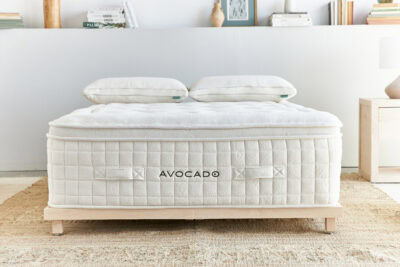
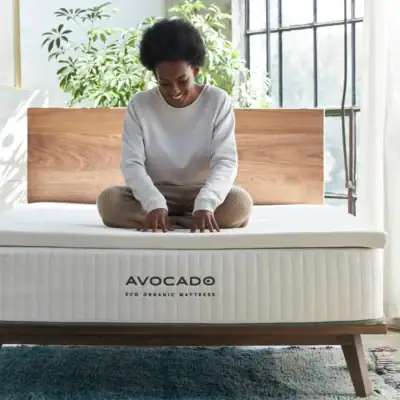
This is not fine print to skim past. It is one of the best tools you have as a buyer. A store that sells real latex will point to these certifications and explain them plainly. Several brands on our floor, including Avocado and Naturepedic, build their beds on certified natural and organic latex.
The Law Tag, and What It Lists
There is one part of every mattress label that is not marketing at all. The law tag, the small sewn-in label that warns it should not be removed, is required by law, and the wording on it cannot be dressed up. You will find it tucked into a seam along the side or the bottom of the mattress. The warning about removal is aimed at sellers, not you, so you are free to lift the tag and read it.
The law tag names the maker and a registration number that traces the mattress to the factory that built it, and states whether the filling is new or recycled. Most useful of all, it lists the filling materials inside by percentage of weight. Because that content is required rather than chosen, the law tag is the quickest way to check a sales pitch against reality. If a bed is sold as natural latex and the tag reads mostly polyurethane foam, the tag settles the question.
Buyer’s Tool: The Latex Label Checklist
- ☐ The tag specifies natural, blended, or synthetic, not simply “latex.”
- ☐ Any natural or organic claim is backed by GOLS or a comparable certification.
- ☐ You know whether each layer is Dunlop or Talalay, and the reason for each.
- ☐ The cover materials are named, such as organic cotton or wool, and certified.
- ☐ An emissions certification, such as Greenguard Gold or eco-INSTITUT, is present.
- ☐ The law tag lists the fill materials, and they match what the mattress is sold as.
Frequently Asked Questions
How long does a latex mattress last? A good natural latex core often lasts fifteen to twenty years or more, well past the lifespan of other foams. That long life is one of the main reasons latex shows up in better mattresses.
Is latex better than memory foam? It depends on what you want. Memory foam sinks slowly and holds heat, while latex springs back and breathes. Austin Natural Mattress focuses on natural materials and no longer carries memory foam.
Does a latex mattress have an odor? New natural latex can have a faint rubber or vanilla smell that fades within a short time. It is not the chemical off-gassing that some synthetic foams release.
Is latex a good choice for hot sleepers? Yes. Its open structure and pincore holes let air move through, which makes it the most breathable foam you can buy. That helps during long Central Texas summers.
What is the difference between Dunlop and Talalay? Both are natural latex made by different curing methods. Dunlop is denser and more supportive, Talalay is lighter and more even. Many mattresses use both, one layer for support and one for comfort.
Try It in Person
At Austin Natural Mattress, latex is a big part of how we build a healthier bed. Our floor carries the largest selection of natural and organic mattresses in Texas from top brands like Naturepedic, Avocado, Vispring, and The Natural Mattress Home, so you can test and compare in person.
White-glove delivery is available throughout Central Texas and the Greater Austin Metro, including Westlake, Tarrytown, Lakeway, Cedar Park, Georgetown, Lago Vista, Round Rock, and Dripping Springs. Come in and find the one that fits how you sleep.
Website: austinnaturalmattress.com
Hours:
Mon: 10 AM – 7 PM
Tue: 10 AM – 7 PM
Wed: 10 AM – 7 PM
Thu: 10 AM – 7 PM
Fri: 10 AM – 7 PM
Sat: 10 AM – 5 PM
Sun: 12 PM – 6 PM
Address: 7530 Burnet Rd, Austin, TX 78757
Phone: (512) 452-4444